

Rising 2,381 meters above sea level, Santa Ana Volcano is El Salvador's highest peak and features a 4.3-mile trail leading to a steaming, sulfur-rich crater lake. Hikers who reach the summit are rewarded with sweeping views of the neighboring Izalco Volcano and the deep blue waters of Lake Coatepeque far below.
Find Guided ToursSanta Ana Volcano, also known by its native Nahuat name Ilamatepec, is the highest volcano in El Salvador. Standing at 2,381 meters above sea level in the Santa Ana department, this active andesitic-to-basaltic stratovolcano sits immediately west of the Coatepeque Caldera within the Central America Volcanic Arc. The name Ilamatepec translates to 'hill of the old woman,' connecting the peak to indigenous myths and local heritage.
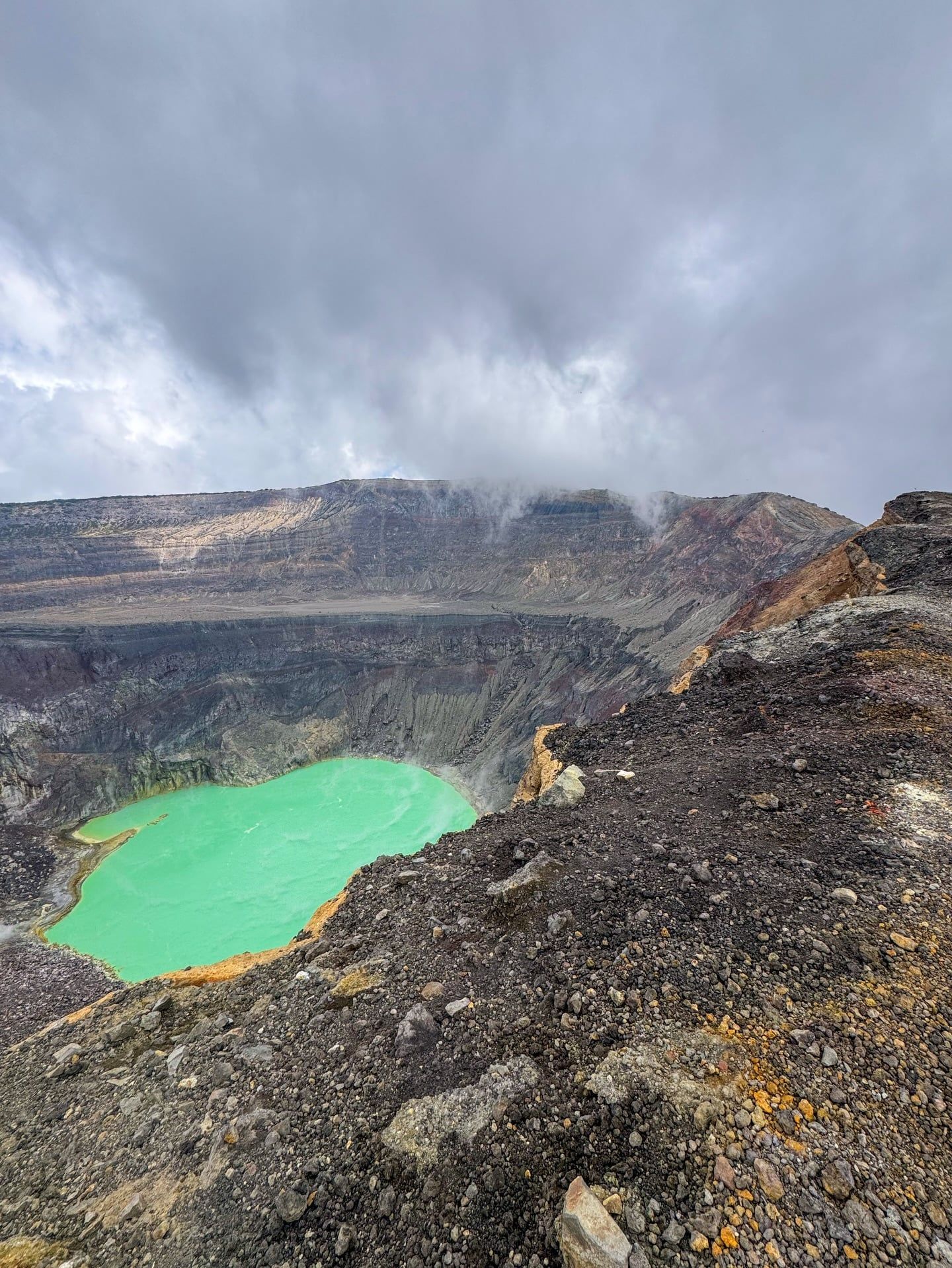
The broad summit features a series of four nested crescentic craters spanning a 3.5-kilometer circumference. Inside rests a highly acidic crater lake characterized by a striking turquoise-green color, which is caused by a composition of 90 percent sulfur and 10 percent other trace minerals. The water temperature in this steaming lagoon ranges from 45 to 60 degrees Celsius. Beyond the summit, a 20-kilometer-long fissure system extends down the flanks into Cerro Verde National Park. This habitat supports 12 endemic bird species, 12 endangered flora species, and 58 threatened species. The volcano's distinct features also served as the creative inspiration for one of the active volcanoes in Antoine de Saint-Exupéry's novella, The Little Prince.
The geological formation of Santa Ana includes a massive collapse during the late Pleistocene epoch. This event produced a voluminous debris avalanche that ultimately formed the Acajutla Peninsula. Historical eruptions at the site have been formally documented since 1520.
A notable historical event occurred in 1722 when an eruption from the San Marcelino cinder cone sent a lava flow 13 kilometers to the east. The volcano remains active today, with its most recent major eruption taking place in late 2005. This explosive event ejected car-sized rocks into the surrounding area and tragically resulted in several fatalities.

Discover the full history and cultural significance on our About page.
At the 2,381-meter summit, a turquoise-green lagoon fills the crater. The water reaches temperatures between 45 and 60 degrees Celsius due to its 90 percent sulfur composition. Hikers can hear the volcano groaning as steam hisses directly from the surrounding yellow-stained rocks.
The exposed upper ridges of the 4.3-mile out-and-back trail provide clear sightlines down to Lake Coatepeque. This massive body of blue water sits inside an ancient volcanic caldera. On clear days between December and April, the lake creates a striking photographic backdrop.
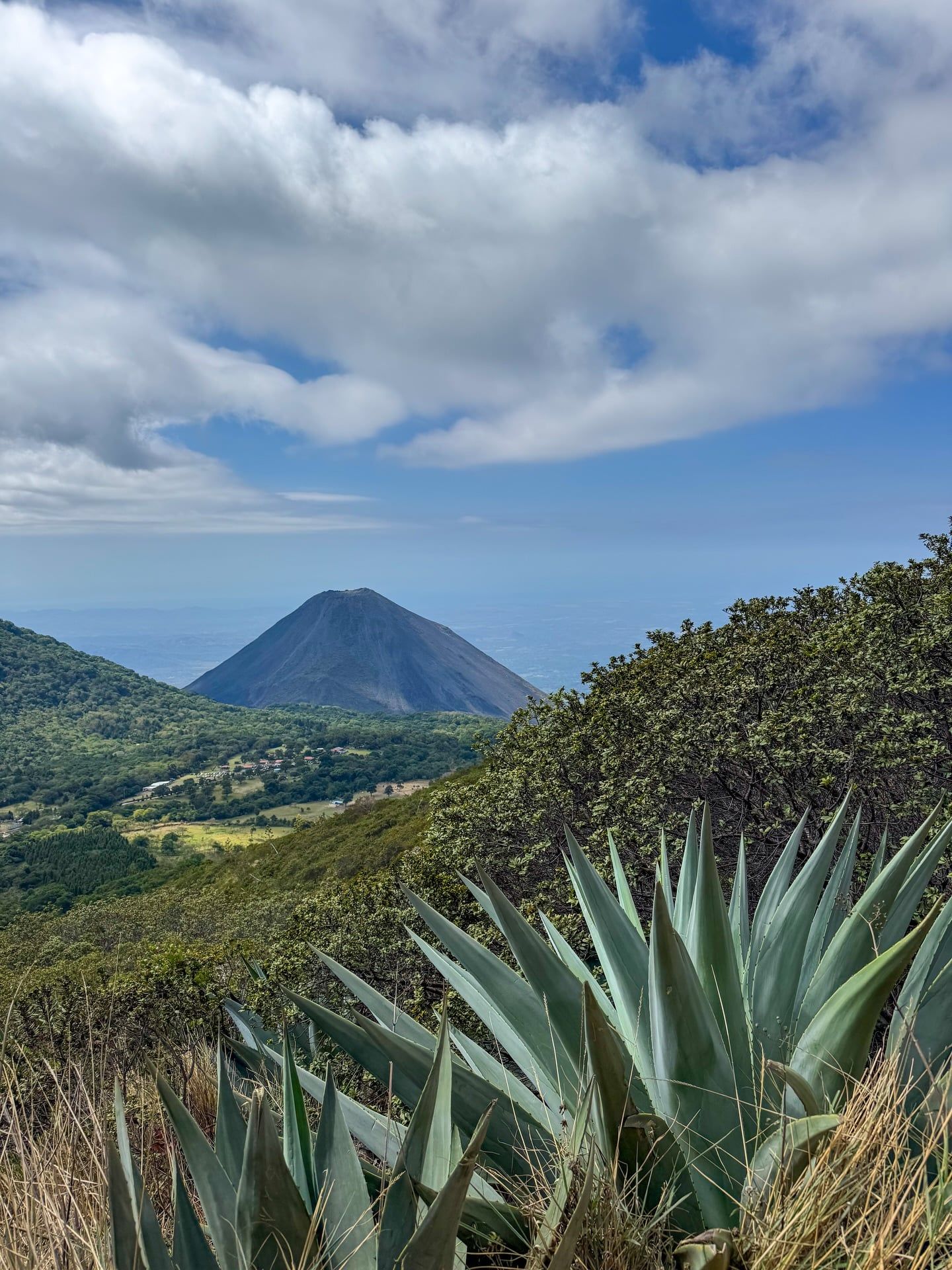
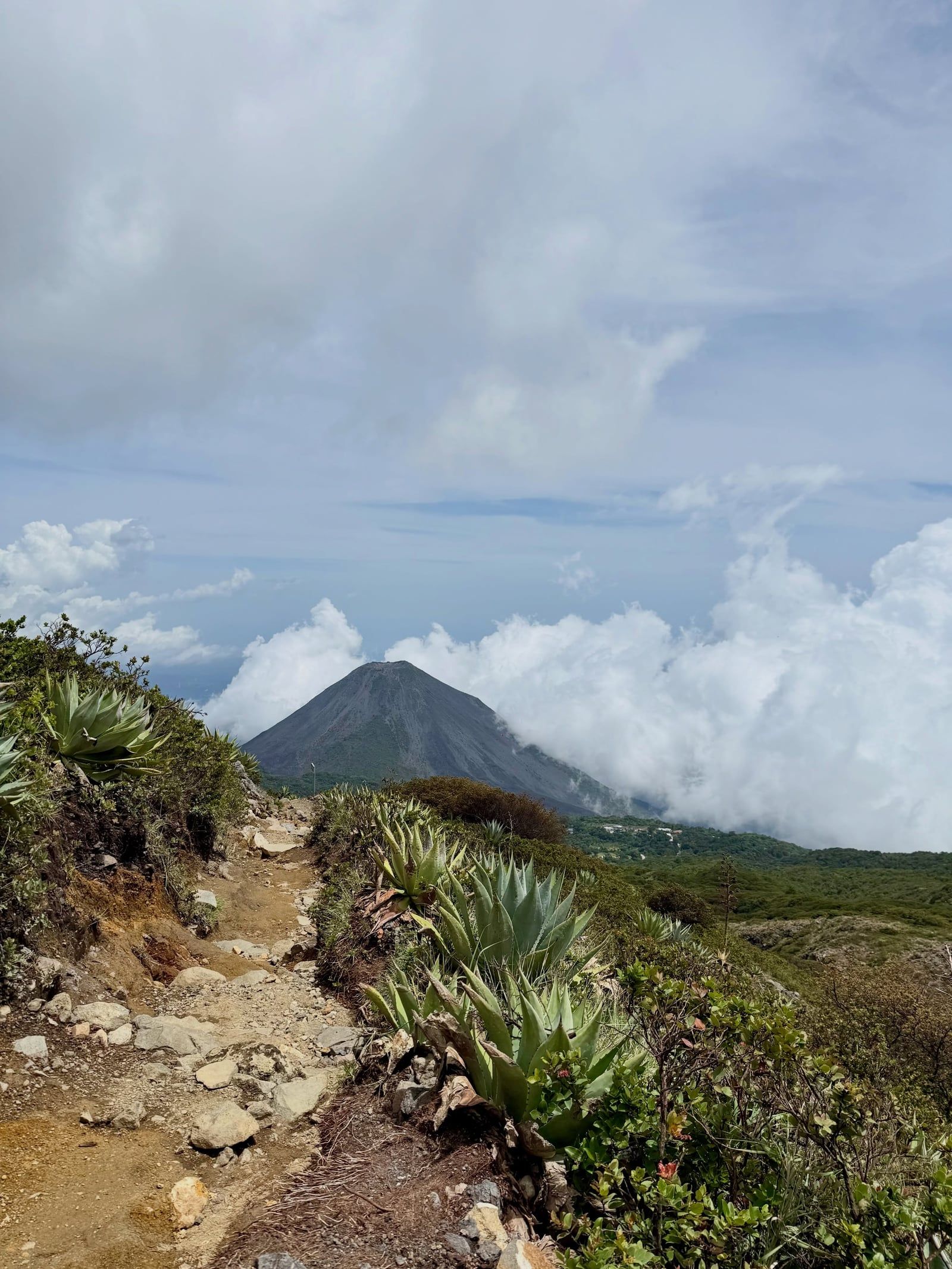
As the hike transitions from a shaded jungle canopy to open terrain, the near-perfect cone of neighboring Izalco Volcano appears. The dark, barren volcanic slopes stand in sharp visual contrast to the surrounding green flora of Cerro Verde National Park.
The crater rim spans a 3.5-kilometer circumference exposed to intense wind gusts. Despite the rugged conditions, local vendors wait at the top to sell fresh fruit popsicles and ice cream. Eating a cold dessert while standing beside an active volcano provides a highly unusual sensory contrast.
Hand-picked tours with free cancellation and verified reviews
 Free Cancellation
  Free Cancellation
  Free Cancellation 9h
  Free Cancellation
  Free Cancellation
  Free Cancellation
  Free Cancellation
  Free Cancellation
 The dry season from December to April is the optimal time to hike Santa Ana Volcano. Visitors during this window enjoy sunny days with clear visibility, avoiding the severe weather and cancellations common from July to November.
March and April fall within the prime dry season, offering spectacular panoramic views of the turquoise crater lake. Hikers should prepare for strong sun exposure on the rocky upper slopes.
July and August fall within the worst time to visit due to the rainy season. Dense fog blocks visibility, and bad weather often causes park authorities to cancel guided hikes.
These months are entirely within the rainy season. Dense clouds frequently shroud the area, while slippery rocks and lightning strikes pose severe safety hazards that can halt all trail access.
The peak dry season provides sunny days and clear skies. This weather offers excellent visibility of neighboring Izalco Volcano and the highly acidic crater lake, making it the ideal time to hike.
Guided hikes depart daily at 11:00 AM from the Cerro Verde National Park ranger station. Visitors must arrive between 9:30 AM and 10:00 AM to complete registration. Guides do not take groups up the trail after 11:00 AM.
| Category | Price |
|---|---|
| Foreigner Volcano Entrance | $6.00 |
| National Citizen Entrance | $3.00 |
| Cerro Verde National Park Entry | $3.00 |
| Mandatory Guide Fee | $1.00 - $3.00 |
| Children (under 12) and Seniors | Free |
| Car Parking | $3.00 |
| Motorbike Parking | $1.50 |
Advance permits are not required, but visitors are legally mandated to hike with an authorized local guide or POLITUR (tourist police) officer. Bring small bills and coins to pay the separate entry and guide fees. Hikes are subject to cancellation by park authorities in the event of heavy rain, dense fog, or lightning strikes.
For complete schedules and ticket prices, visit our Hours & Fees page.
Visitors must travel to the Cerro Verde National Park ranger station, which serves as the official trailhead and registration point. Access is available via a strictly scheduled daily public bus from Santa Ana or by private vehicle.
📍 Cerro Verde National Park Ranger Station, Santa Ana Department, El Salvador
The #248 public bus provides the only guaranteed transit to the trailhead. It departs strictly once a day between 7:30 AM and 7:40 AM from the Sala de Espera y Abordaje on 11 Calle Pte in Santa Ana. This schedule ensures visitors arrive before the 11:00 AM mandatory guided hike. The return bus collects passengers at the same drop-off location in the afternoon.
Visitors can drive directly to the Cerro Verde National Park ranger station to access the trailhead. Drivers should plan to arrive between 9:30 AM and 10:00 AM to complete registration before the 11:00 AM hike departure. When driving through the Los Andes sector of the park, motorists must strictly obey the capped speed limit of 10 kilometers per hour.
Riding a motorbike to the Cerro Verde National Park entrance is another viable transport method. Riders must park at the ranger station, as motorcycles are strictly prohibited on the volcano trail. Like cars, motorbikes must adhere to the 10 kilometers per hour speed limit within the Los Andes sector. Arrive by 10:00 AM to complete the registration process.
For detailed transport options and routes, visit our Directions page.
The #248 bus is the only guaranteed public transit to the trailhead. It departs strictly between 7:30 AM and 7:40 AM from the Sala de Espera on 11 Calle Pte in Santa Ana. Missing this $0.90 ride means you will not arrive in time for the mandatory 11:00 AM guided group hike.
You will need exact change to pay the various entry and guide fees. Foreigners must pay a $6.00 volcano entrance fee, a $3.00 park entry fee, and a $1.00 to $3.00 guide fee. Having small bills and coins makes the mandatory morning registration process much faster.
Do not attempt this 4.3-mile trek in flip-flops or flat-soled shoes. The trail features slippery igneous rocks and steep, loose volcanic gravel that becomes especially hazardous during the descent. Hikers need comfortable sneakers with excellent grip or proper hiking boots to maintain stability. Walking poles are also highly recommended.
Carry at least 1.5 to 2 liters of water for the 3 to 4.5-hour hike. Adding powdered electrolytes is highly recommended to prevent heat exhaustion. While the lower trail provides jungle canopy shade, the upper slopes are completely exposed to direct sunlight, requiring a hat and high-SPF sunscreen.
The weather at the base of the volcano is hot and humid, but conditions change rapidly as you ascend. The summit is highly exposed to strong wind gusts and cold temperatures. You will spend about 30 minutes at the crater rim, so a light jacket is essential for comfort.
Park authorities strictly prohibit flying drones at the summit and throughout Cerro Verde National Park without a special advance permit. Rangers enforce these regulations strictly. Visitors should also note that weapons, alcoholic beverages, and pets are completely banned from the protected area.
This massive blue lake occupies the enormous caldera of an ancient volcano. Visitors can relax at lakeside restaurants, participate in water sports, or photograph the water from surrounding viewpoints.
Serving as the starting point for the volcano hike, this park contains dense cloud forests and well-maintained trails. The protected area supports high biodiversity, including twelve endemic bird species.
Historically known as the Lighthouse of the Pacific due to past continuous eruptions, this younger volcano presents a challenging hike. Its dark, barren slopes contrast sharply with the surrounding forests.
Read what travelers share about their experience visiting Santa Ana Volcano — from practical tips to personal highlights.


Foreigners pay a $6.00 volcano entrance fee, a $3.00 Cerro Verde National Park fee, and a $1.00 to $3.00 guide fee. Taking the public bus adds $1.80 round trip, bringing the total cost for an independent trip to around $11.80 to $14.00. Bring small bills and exact change to speed up the registration process.
The 4.3-mile out-and-back hike takes about 3 to 4.5 hours to complete. This includes 1.5 to 2 hours to ascend, a 30-minute stay at the summit, and 1 to 1.5 hours to descend. A full day trip from Santa Ana city takes roughly 11 to 12 hours including transit.
Take the #248 bus departing from the Sala de Espera on 11 Calle Pte in Santa Ana city. The bus leaves strictly once a day between 7:30 AM and 7:40 AM and costs $0.90 for the 2-hour ride. Missing this bus means you will not arrive in time for the mandatory 11:00 AM guided group hike.
No advance individual permits or bookings are required. However, you are legally required to hike with an authorized local guide or a tourist police officer. Guided hikes depart daily as a group at 11:00 AM from the Cerro Verde National Park ranger station, requiring visitors to arrive between 9:30 AM and 10:00 AM to register.
Bring 1.5 to 2 liters of water, high-SPF sunscreen, a hat, and a light jacket for the cold, windy summit. Wear sturdy sneakers or hiking boots with good traction to navigate the slippery igneous rocks and loose volcanic gravel. Do not bring drones, alcohol, or pets, as these are strictly prohibited by park authorities.
The rugged terrain of dirt paths, forest stairs, and steep volcanic gravel is not wheelchair accessible. Active elderly visitors with a reasonable fitness level can complete the moderate hike. Walking poles are highly recommended to help with the steep 2-hour climb and uneven rocky terrain.
The 4.3-mile trek is suitable for active, sporty older children, and kids under 12 receive free entry to the park. The physical exertion may be too challenging for very young children. Parents must monitor kids closely at the summit because there are no guardrails at the steep crater edge.
Park rangers will cancel the daily 11:00 AM hikes if there is heavy rain, dense fog, or lightning. The slippery volcanic rocks become a severe safety hazard in wet conditions. The best time to hike is the dry season from December to April, which offers clear views of the 2,381-meter summit and neighboring Izalco Volcano.
Browse verified tours with free cancellation and instant confirmation.
Find Tours